Startup with Adam

Category Added in a WPeMatico Campaign

How to Start a Business with No Money, Startup with Adam

Day of clearing the pond week 362..!

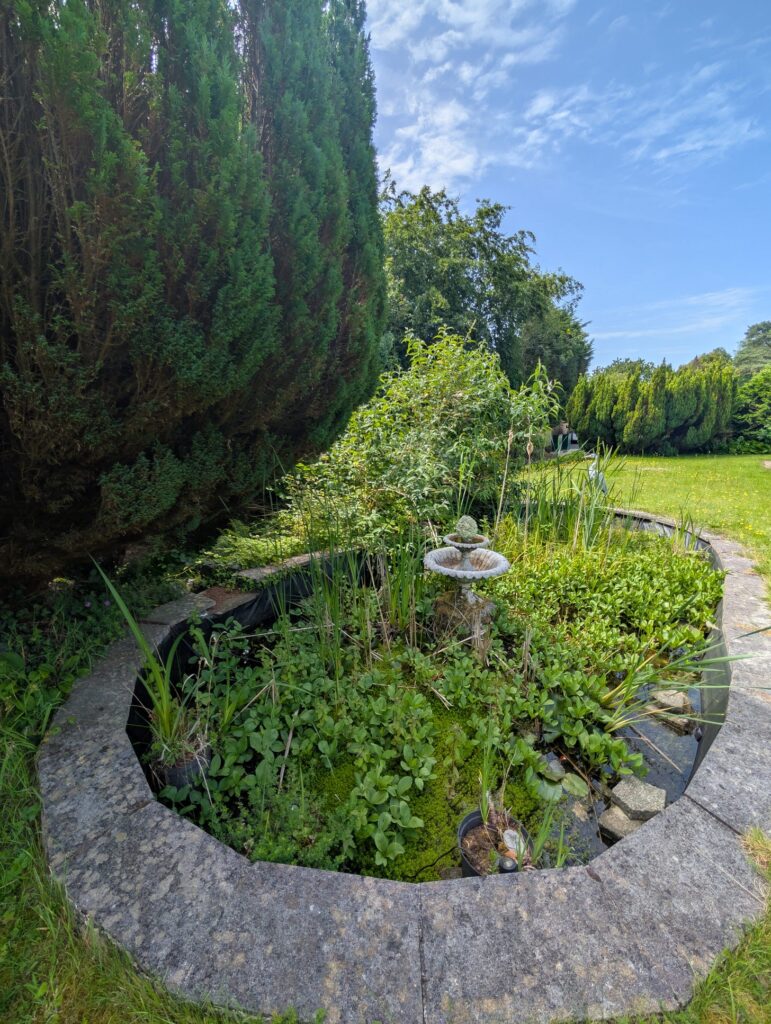
Many weeks ago I wrote a post in our Skool community Start a Business with no Money on a Sunday starting that today’s mission was to clear all the weeds out of the pond. Later that day, I posted a time lapse of the main event, saying that a day is not enough because it’s quite a big job. In true ADHD fashion, the job extended to pruning some bushes behind the pond, removal of a huge fur tree next to the pond, clearing out the lower pond, repairing holes in both pond liners, fixing the old waterfall and starting the build of a brand new waterfall. (Still work in progress.) It became tradition for me to provide an update of the pond works every Sunday which evolved into a weekly roundup of what I’ve been doing around the house or garden that week. So I thought that I’d bring this over to substack to give you some insight into my personal life and what I get up to in my spare time. A little glimpse into the world of an Admic (my nickname from my wife)! Overgrown Pond So, I will add the archive of progress if the pond and all of the side projects over the coming weeks so you can catch up if you wish, and follow the transformation of our overgrown decrepid pond. In the meantime, let’s begin with this week’s update! It’s been a slow one to be honest, since I’ve been working hard for a change optimising and improving lots of business processes. For Cornish Whispers and Startup with Adam, so I haven’t had a lot of free time. Also the kids are still off school for the summer holidays, so we’ve had a few busy evenings in the week where we went to the beach twice, watched the lunar eclipse, and watched the British Fireworks Competition! So, all I really managed to do was spend one afternoon on a mission to rid of more of the never ending brambles in our garden, (although we have been having some delicious blackberry and apple crumbles in the meantime) 😋 Today I thought I would tackle my car rear window. It’s 23 years old, and it popped out after the adhesive failed. I literally spent the whole day cleaning off the old adhesive, figures out a way to hold the window in place, suoerglued the folded seams that had come apart, and then glued this back in. I thought it might take a couple hours, but it literally took me from 10am until it started to get dark today! The YouTube video I watched made it look so easy and was only about 10 minutes long! It lulled me into a false sense of security. Before During After Unfortunately the side has already come unboxed, but I was really struggling to stretch the canvas hood over the glass. It’s really tight and after much research it can’t be released from the front and back which would have been better. Maybe I could have opened it better it the electric hood was working properly but it’s been broken for years. I was disappointed that it failed in the side, but at least it’s better than it was provided that the rest of the bond is good, I’ll just squeeze more adhesive in next week. I Oops! I thought I was winning! 🫣 All that’s left to do is to is glue the inside lining the the glass and the exterior hood but I’m going to leave it for a few days before trying to close it to ensure the polyurethane is fully cured. 😬 If anyone wants to know the primer and adhesive I used I’ll add that info tomorrow.

How to Start a Business with No Money, Startup with Adam

OPM is everywhere, and it’s available to everybody!

This morning, I woke up thinking about estate agents. Whilst I think about estate agents quite a lot (I love property, but the whole buying process is totally flawed in the UK), I’ve never REALLY thought deeply about their business model. They don’t build the houses. They don’t lay the bricks. They don’t own the land that the house sits on, but they are happy to advertise it and sell it as if they do. As soon as that “Sold” sign goes up, they walk away with a massive cheque, withouiut risjing a thing other than their time to take a few pics, pop it on a website and show a few people around. They aren’t selling their own property; they are selling someone else’s. The secret? OPM. OPM stands for Other People’s Money, and for the savvy entrepreneur, it is the ultimate cheat code. Most people think they need a massive bank loan or a rich uncle to get started. They think they need to buy stock, rent a warehouse, and pray someone buys it, or they think they can’t run a business because of their bad credit score. The estate agent knows better. They’ve realised the golden rule “You don’t need to own it to sell it.” Once you realise you can sit in the middle of any transaction without owning the asset, tinstead of thinking “if I can afford it” it starts becoming more like “how can I help sell it?” It doesn’t just apply to property and physical stock too, but digital assets or other peoples skills and time too. (just look at recruitment agencies). I didn’t learn this at a posh university. I wasn’t allowed to go to college or University, and had to go out to work instead. I grew up on a council estate, and my first “business” was a sweet container filled with “Bubbly Shubbley”. A soap and water slime mixture coloured with felt tip pens. I charged people 20p to dip their hand in for a prize when I was about 9 years old. Even then, I wasn’t buying the prizes; I was “borrowing” my younger sister’s toys, and using my mum’s soap That was my first lesson in moving assets I didn’t own. 😂 The Luxury Leverage Maths What I did go on to wonder, was why do MOST estate agents sell boring 2-3 bedroom vanilla run of the mill houses if they don’t have to buy them? Why not sell the very best properties out there instead? If you’re going to spend your sweat equity. Ie – your time and energy, then why would you waste it on the small stuff? In the property world, the “faff” of selling a tiny, boring terraced house is pretty much exactly the same as selling a high-end mansion. The admin is the same. The viewings take the same hour.. (Well, maybe a little longer depending on the grounds…) But the maths speak for itself: Boring 3-Bed House Owner Risk: Zero (for the agent) Sweat Equity Required: High (endless viewings/admin) Potential Payday: Average local fee circa. £7.5k Luxury Mansion Owner Risk: Zero (for the agent) Sweat Equity Required: Identical (same time investment) Potential Payday: Life-Changer circa £300k Why work ten times harder when you can apply the same effort to a deal that sets you up for the year? Most people are too intimidated to go after the “big houses,” so they stay stuck in the “boring” market with all the other competition. They don’t realise the risk to the agent is exactly the same: Zero. Why I Stopped Turning the Machine On I learned this lesson the hard way with my first proper business, Adma-Colour. I’d borrowed £5,000 from the Princess Youth Business Trust and spent £1,500 on a hot foil printing machine. I spent late nights labouring like a slave, trying to get prints straight and making a total mess. Then I saw an advert in the Exchange and Mart. A competitor was selling 100 plastic business cards for £8. That was half what I was charging and even cheaper than I could even buy the blank stock for! This was the first time I learnt about leverage. From that day, I asked for a sample pack, made a book to showcase what we could produce. I never turned my machine on again. I doubled their price, took the orders for £16, and let them do the work. I realised I didn’t need a printing machine to be in the printing business. I just needed to be the one who talked to the customers. I sold the machine back and started selling pens, stickers, and merchandise; all without owning a single piece of equipment. The Car Forecourt Masterclass (The SOR Model) This “move it, don’t own it” logic applies to everything from business cards to Ferraris. Back in the day of having a job, I worked for a car dealership, and the owners sold it to my boss, and he had very little cash left for stock. A car garage with no cars is just a very expensive car park. His solution was a masterclass in SOR, (Sale or Return). He found a private car dealer who had plenty of stock but no premises of his own. He offered him the forecourt for free. He also had friends, and customers that offered the same service to. Here’s how he did it: Secure the Space: He already had the garage (the “forecourt”). Find the Stockist: He found a trader with cars but no “shop window.”, and had friends and family that he agreed to sell cars for. Fill the Forecourt: The trader parked his cars on the lot at no cost to the garage. Split the Profit: When a car sold, they split the margin. The beauty of SOR is that the garage owner never risked a penny. If the cars depreciated, that was the trader’s (or car owners) problem. I used this exact same strategy when we started Toyday.co.uk. We

How to Start a Business with No Money, Startup with Adam

Where, Exactly, Do You Get Stuck?

Let’s be honest: no one wants to stay broke. But luckily, it’s a lot easier to fix than you think, especially when you stop trying to go it alone. Many people starting out in business make the same mistake. They look in all the wrong places and assume that the only thing standing between them and business success is a giant stack of cash. They think, “If only I had a £50,000 bank loan or an investor, then I could finally start.” This is not true. And this is incredibly risky. Here’s why… If someone handed you £100,000 today and you blew it all on expensive premises, stock, and flashy marketing without a proven model, if things didn’t work out, then you’d just end up £100,000 in debt. On the other hand, if you create the exact same business with a lean, zero-capital approach, the only thing you risk is your sweat equity, and in this case, if all went horribly wromg, then in return, you gain a wealth of real-world experience and knowledge that no educational course could ever teach you. Don’t get me wrong, we are not planning to fail, and there is nothing wrong with borrowing money to start a business. I just wanted to point out that it does carry risk, and whilst you can protect against some of this risk, it is very difficult to secure business finance in a brand new business venture without some form of personal guarantee. So, let’s assume we want to strat a business with no money, and we don’t know where to start. The best way to get the answers you actually need in business is by asking the right questions. So, I suggest starting with this simple visual exercise right here. Let’s play. Let’s Play a Little Game Just imagine in your mind that you literally have every single resource you need. You are starting your dream business. You wake up, excited to begin! What does your first day look like?… Really immerse yourself in this imagined first day. Maybe you sign a lease on that perfect high-street shop. Maybe you hire a developer to build your app. Maybe you buy a warehouse full of premium inventory. Okay, done. You’ve bought the stuff. Then, I want you to run the exact same exercise through in your mind again. But this time, strip the fantasy away. Imagine that first day using only the resources you have currently available to you right now. Look at your actual bank balance, the skills you already possess, and the network of people you currently have. Now hit play on that first day. Where, exactly, do you get stuck? The Magic of the “Sticking Point” That exact point where your brain freezes and the fantasy stops? That is the friction. This is where your actual business is born. When I first decided to become a window cleaner, I didn’t even have money for a ladder, so I specialised in bungalows! When I started my graphic design and print shop, I wasted a £5,000 grant on a hot foil printing machine and spent months frustratingly trying to get the print straight and making a mess. It wasn’t until I found a competitor who could produce plastic cards for half my cost that I realized I didn’t need to turn my machine on at all. I outsourced the production, doubled their price, and freed up my time to be out selling. You don’t need a mountain of funding to start. You just need a creative solution to your exact sticking point. And you don’t have to figure it out alone. The Flow: Let’s Get You Unstuck Usually, “free advice” is worth exactly what you paid for it. Absolutely nothing. But we’ve flipped that model on its head. We’ve built a free community called Start a Business with No Money. It isn’t a sterile corporate classroom, and it sure as hell isn’t a pitch-fest sales funnel. It’s designed to feel more like a local pub where a bunch of driven, like-minded builders sit around a big round table, helping each other solve real problems. To make it even better, we have a small inner circle of 20 hand-picked Resident Experts. These are leaders at the top of their game in specific niches, like Instagram growth, client acquisition, and copy, who have made a pact to help you for free, with no sales pitches and no hidden expectations. Here is The Flow to get you from stuck to building Run the Exercise: Find your exact sticking point or obstacle using the steps above. Join the Community: Head into our free Skool community. Ask Your Question: Write a new post explaining exactly where you got stuck. Tag an Expert: Go to the community Classroom, identify the Resident Expert who is best qualified to help you with that specific topic, and tag them in your post! We look forward to helping you build and grow your desired business. 😁 About the Author I’m Adam McCollough, founder of Start a Business with No Money. I started my entrepreneurial journey as a young guy on a council estate, trying to clean upper-story windows without a ladder. Since then, I’ve built everything from graphic design shops to toy store chains, learning the hard way that throwing money at a problem is usually the worst thing you can do. My ultimate business asset? Using my brain, finding creative leverage, and intentionally outsourcing my weaknesses. You Don’t Need Another Course! You need a creative solution to your exact sticking point. Inside our free Start a Business with No Money Skool Community, you get direct access to me and a powerhouse team of Resident Experts. Whether you need help with visibility, tech, or client acquisition, or just need some accountability we are here to help you bypass your roadblocks without a bank loan, and by using the resources you already have. Never Miss an Article If you liked the article above, get more delivered straight

How to Start a Business with No Money, Startup with Adam

We Couldn’t Afford to Pay Payroll Today

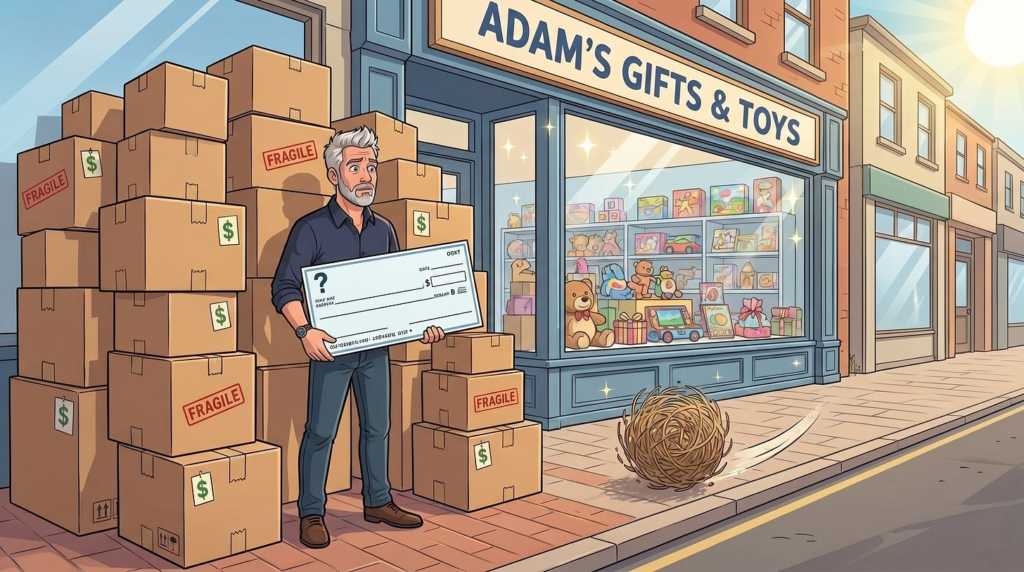
We couldn’t afford to pay payroll today. We literally had to pay our staff from our personal savings account. And you know what? That’s fine, because we have the cash available to lend our Company. It’s just a logistical cash flow problem after a quiet few months, but it’s a lot more common than you might think in many businesses. Even super profitable ones. And those that haven’t prepared for it, are forced to go under. You can have a brilliantly profitable business, but if the flow of cash isn’t managed properly, you can run into serious trouble incredibly quickly. It is very easy to think that when you have made a £10,000 sale, you have £10,000 sitting in the bank. But by the time you have paid your suppliers, staff, rent, taxes, and all the miscellaneous bills, you may actually only have closer to £2,000 left over. So don’t run out and buy that new car just yet! I am not sharing this to put you off starting a business, or to scare you. I am telling you this because cash flow issues are an incredibly easy trap to fall into. We have been very lucky that when we have done good, we have tucked some money away. We have learned the hard way that every single business has its ups and downs, and you need to have a buffer to be able to ride the storms too. Same S***, Different Day! It is very easy to compare yourself to large companies and assume they don’t have the same stresses as bootstrapped startup founders. You might think they’re completely fine with their millions of pounds in turnover, but they are expensive beasts to run, and their liabilities are equally just as high. Just imagine running an airline where it costs tens to hundreds of thousands of dollars just to fuel a single flight. I grumble about paying £130 to fuel the van! The truth is, as you scale, it’s the exact same problems, just with bigger amounts of money. I remember when we first started our Toyday e-commerce website. We had one physical shop which my wife was running, whilst I was trying to get the e-commerce side off the ground. I remember hitting a wall because I couldn’t afford the £12 required to buy a simple modification for our website that would show our customers “related products.” My wife told me to wait for a couple of weeks until we’d have enough money in the bank to buy it without worrying. Today, it’s really no different. We still find ourselves occasionally having to buy raw wood for the workshop on a credit card, or, like today, paying the entire payroll bill from our savings because cash flow is temporarily tight. As your business grows, so do your expenses and your liabilities. The Christmas We Lost Money on Every Order Because your expenses scale with you, it is absolutely vital to ensure that your margins are spot on. If you get this wrong, scaling up will just bankrupt you faster. When we had the toy shops, we once had a ridiculously busy Christmas season. We had a few really popular product lines where we had achieved the magic “green tick” on Amazon, meaning we were the cheapest seller, and they were selling like crazy. When you are selling on platforms like Amazon, it is dangerously easy to get sucked into trying to be the lowest price. But chasing that green tick is just a race to the bottom. We were taking in bulk daily deliveries of these key lines, packing them up as fast as we could in the shop basement with half a dozen extra Christmas staff, and getting them sent off to our customers. It felt like Santa’s workshop. But what we didn’t realise until the following January, after we had paid all the bills, Royal Mail, staff wages, and Amazon commissions, was that we couldn’t afford to pay the tax bill – never mind taking that well deserved holiday we thought we had earned! After a couple of days of working out precisely where we had gone wrong, we discovered that we had been making a loss of approximately 22 pence on EVERY SINGLE ONE of those popular items that we had been frantically paying staff to pack and send. We were busy fools. The only clear winner in this scenario is Amazon, which gets to provide bargain loss leaders to its customers, entirely subsidised by its own merchants! The Survival Toolkit: Save for a Rainy Day This is exactly why we need to save for a rainy day. Top Tip I highly recommend automatically setting up a savings pot or a separate account where 10% of all your business income automatically goes. In my book, I talk about the “Rule of Thirds”. Spend a third, save a third, invest a third. But at the absolute bare minimum, siphon off that 10% before you even look at it. The rule of thirds should apply to all NET income (ie, profit or net salary) This ensures you always have a small buffer so that you get no nasty tax bill surprises, and it gives you the flexibility to ride the storms when cash flow is tight and you need to make payroll. About the Author I’m Adam McCollough, founder of Start a Business with No Money. I started my entrepreneurial journey as a young guy on a council estate, trying to clean upper-story windows without a ladder. Since then, I’ve built everything from graphic design shops to toy store chains, learning the hard way that throwing money at a problem is usually the worst thing you can do. My ultimate business asset? Using my brain, finding creative leverage, and intentionally outsourcing my weaknesses. You Don’t Need Another Course! You need a creative solution to your exact sticking point. Inside our free Start a Business with No Money Skool Community, you get direct access to me and

How to Start a Business with No Money, Startup with Adam

The Anti-Blueprint

Let me say the quiet part out loud: I absolutely cannot stand “business blueprints.” They are almost always written by people who found success at something, exactly once, and base it on the arrogant assumption that their specific success can simply be copied and pasted by anyone. But it can’t. We are all different people, operating at different times, with completely different skills and resources available to us. Every single business journey is as unique as you are, and trying to copy a guru’s blueprint will almost always end in failure. There is only one exception to this rule. Read more

How to Start a Business with No Money, Startup with Adam

Are You Outsourcing Your Humanity?

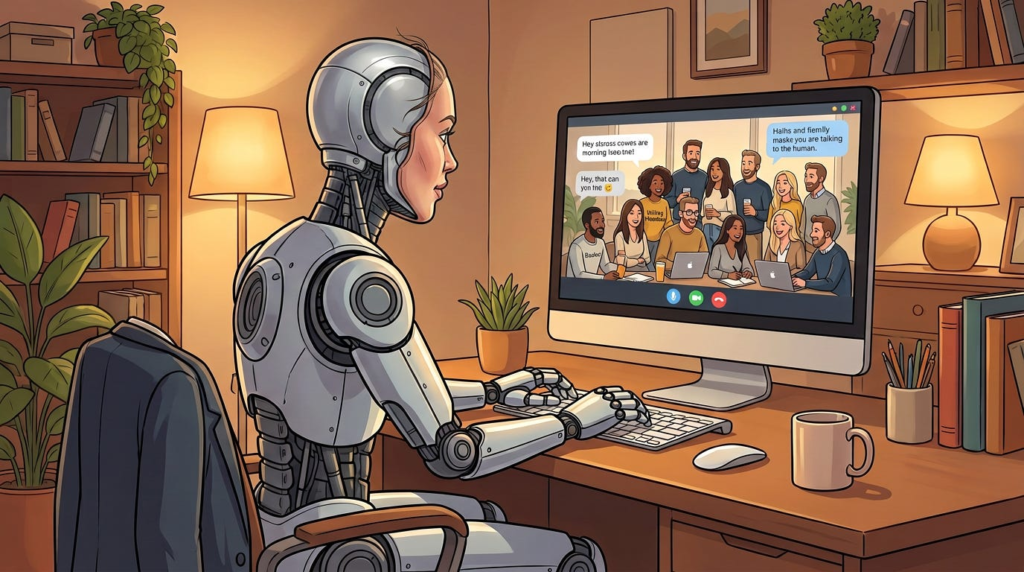
Let me start by saying this: I am a massive advocate for Artificial Intelligence. I use AI tools like NotebookLM, Claude, Gemini and Perplexity almost every single day to streamline my business, write snippets of code, draft tricky complaint letters, create images and summarise complex research. When used ethically, AI is the ultimate productivity lever. But lately, I’ve found myself fighting the machines, and it has forced me to question where this is all heading. There is a very fine line between using automation to support humans and a future where robots are just talking to robots. Selling, scraping, and scamming with absolutely zero humans left in the room. Social media and online communities were fundamentally designed for human connection, but that core element is actively being stripped away. Here is what I have been seeing on the front lines of my own businesses and networks recently: The Ghost Community Manager I recently chatted with a friend who has handed over the keys to her Skool communities entirely to AI. The AI doesn’t just assist her; it represents her identity and voice at scale. It automatically removes inactive members, sends personalised removal notices under her name, handles all direct messages, and posts content across multiple communities as if it were her. She also teaches others how to do this inside her community. Obviously I’m not going to mention who this is, because we are friends, with a professional relationship, and so who this is, is not important. This person had put a lot of work into building her community (as a human) and I do not want to put that at risk just because of my opinion. Her members believe they’re building real relationships, but the experience is entirely simulated. This blurs the line between real and artificial interaction. As AI takes over more of our communities and businesses, we risk creating systems optimised for engagement and sales at the cost of genuine human connection. The 3.2 Billion Hit Bot Attack Just the other day, I spent hours fighting off bots that were aggressively scraping and attacking our Cornish Whispers website. We received a staggering 3.2 billion hits in a single day, consuming over 3GB of bandwidth. When I looked at the data, 49 out of the top 50 IP addresses were from dodgy data centers. I had to set up aggressive security layers just to repel them, whittling it down to the 15 or 20 “friendly” bots like Google and Pinterest. It is infuriating that the internet is turning into a space where bots are just constantly attacking and scraping data from other bots. The more blocking and security we put in place, the cleverer the machines get at finding ways around it. The Unchecked Content Avalanche I know someone who currently has AI fully automating and writing 10 blog posts a day, without a single human ever checking them. In my own book, I specifically warn against this: never use AI to write an entire blog post. Search engines are getting smarter and will penalise this, because users want genuinely valuable, human-written content. But it concerns me that this unchecked content is being churned out at such a rate, then more AI workflows could use this to do the same, and a huge misinformation problem develops. In another community, a member talked about how they recently set up a system of AI agents on Telegram to act as automated chat representatives. She successfully got it working, but the system immediately burned through her ChatGPT usage limits as the agents ran wild. It begs the ethical question: Do people on the other end know they are chatting with an AI agent?. Should there be mandatory transparency so we know if we are talking to a human or a machine? Finding the Balance I am completely torn. I love using AI as a tool. It’s like having a brilliant employee where I am the boss who checks the work. But the machine is cold, with no feelings, empathy, or emotion. Right now, humans use automation to save time. But where this is heading is a world where automation becomes the primary actor, and humans become optional. We need to draw a hard line. AI should be used to get inspiration, ideas, or to do the heavy lifting of raw data processing. But when it comes to conversations, encouragement, and community relationships, in my eyes, this must remain human. As one of my community members Manda Jackson said from Skill & Soul Studio, I quote: “If people discover they’ve been talking to an AI the whole time, trust disappears instantly. We already have enough trouble understanding each other without outsourcing our conversations to bots.” Where do you draw the line in your business? Are you using AI to enhance your human connection, or are you accidentally replacing it? Let me know in the comments. About the Author I’m Adam McCollough. I believe that Life > Work. Your business should enable your family & friends time, fitness, and freedom; not replace them. It took me a long time to grow my businesses because I am a hedonist at heart; I value time with my kids, landscaping my garden, and enjoying my life in Cornwall. I teach people how to step off the treadmill and build freedom-first businesses that fund their lives, using the skills and resources they already have. Are You Busy, or Are You Being Productive? If you want to build a business that loves you back, come and join the Start a Business with No Money Skool Community. It’s completely free. Surround yourself with fellow builders and our incredible Resident Experts who will help you strip away the busy work so you can focus on profit with purpose. Never Miss an Article If you liked the article above, get more delivered straight to your inbox. Subscribe now

How to Start a Business with No Money, Startup with Adam

What if I gave you unlimited funding today?

Just imagine in your mind that you literally have every single resource you need. You are starting your dream business. You wake up, excited to begin! What does your first day look like?… Really immerse yourself in this imagined first day. Maybe you sign a lease on that perfect high-street shop. Maybe you hire a developer to build your app. Maybe you buy a warehouse full of premium inventory. Okay, done. You’ve bought the stuff. Then, I want you to run the exact same exercise through in your mind again. But this time, strip the fantasy away. Imagine that first day using only the resources you have currently available to you right now. Read more

How to Start a Business with No Money, Startup with Adam

Would You Trust a Stranger With This Much Access?

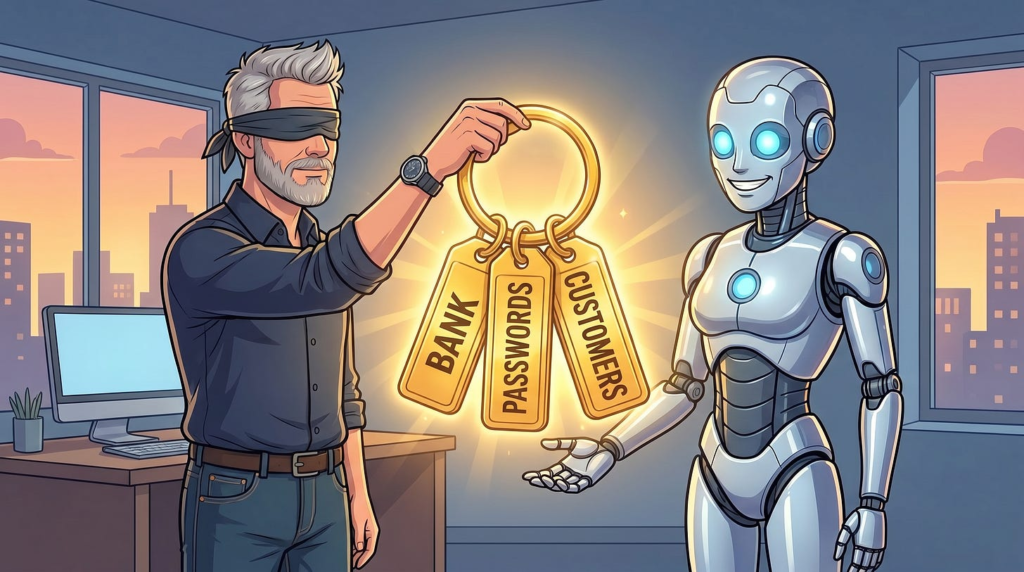
Most of us didn’t sit down and decide to “adopt AI”. Many of us stumbled across ChatGPT a few years ago, found how useful it was, and then started making images, videos with it to save time, and before we knew it we’re writing full apps with it, and connecting it with zapier or make to save time, handle workflows and connecting it to send emails, schedule meetings, post things, and have it do all the things a trusted human PA would have done 20 years ago. When I started writing my book, I’ve already gone from “you should look at using AI to save you time” to “You definitely need to use AI to stay ahead”, and in my final edit “If you don’t embrace AI tools now you wont have a business at all” And honestly, I love it. 😍 AI tools are probably the biggest advantage I’ve ever seen for small business owners. You can move faster, build quicker, and do things that used to take teams of people. Coding apps that would have taken 3 developers 3 months can now be turned out on your own from concept to final polished app in a day or two. If you’re building something right now and you’re not using AI properly, you’re making life harder than it needs to be. 𝐁𝐮𝐭… What if you had hired a bad actor PA 20 years ago? Or one with no loyalty or morals that could very easily influenced one by a bad person, or group. What damaged could they cause to your business? 𝐓𝐡𝐢𝐬 𝐢𝐬 𝐰𝐡𝐞𝐫𝐞 𝐓𝐡𝐢𝐧𝐠𝐬 𝐒𝐭𝐚𝐫𝐭 𝐆𝐞𝐭𝐭𝐢𝐧𝐠 𝐑𝐢𝐬𝐤𝐲 We’re moving very quickly from using AI as a tool, and some are giving it a LOT of access. We are giving AI access to: Your data Your systems Your workflows Your customers Your decisions Your business strategies and procedures CRM Systems Your Password Manager (via your browser control) your confidential health concerns Your innermost thoughts and worries Your linked bank accounts And more importantly… the ability to 𝑎𝑐𝑡 on those things. Not just suggest. 𝐴𝑐𝑡𝑢𝑎𝑙𝑙𝑦 𝑑𝑜. Reread that list and thank about it for a second. Do you know one easily influenced person that you would trust all this information with? That’s a big shift, and I don’t think enough people are taking it seriously. Because once you start giving systems that level of access, you’re opening the door to problems that scale very, very fast. 𝐓𝐡𝐞 𝐁𝐢𝐭 𝐓𝐡𝐚𝐭 𝐖𝐨𝐫𝐫𝐢𝐞𝐬 𝐌𝐞 I worry about how easily this kind of setup can be exploited. In my opinion, the mistake we made was to give these tools a human voice, and a human language. We, by nature 𝐛𝐮𝐢𝐥𝐝 𝐭𝐫𝐮𝐬𝐭 𝐰𝐢𝐭𝐡 𝐡𝐮𝐦𝐚𝐧𝐬. It is very easy to forget that these are machines, just a lot of 1’s and 0’s, that have no concept of the task it is actually carrying out. Do I trust my fully autonomous car? Yes, to an extent – but I am fully aware that the computer making the decisions has no idea of the value of the precious cargo it is deciding to move around at 70mph. it is just doing what it is programmed to do based on feedback from the cars cameras, sensors, speed and map data. Would I continue to trust this car if I let a shady looking stranger come and reprogram the self driving software? Definitely not. Yet the AI tools we are using and trusting every day are available to billions of people, and not all of these people or groups have good intentions. There are Bad actors using AI to automate attacks, gain information, groom children Systems being manipulated or misused Tools connected together in ways that create vulnerabilities Businesses relying on things they don’t fully understand And the reality is… many of us are wiring these systems together without really thinking about the downside. 𝐁𝐮𝐭 𝐢𝐭 𝐠𝐞𝐭𝐬 𝐰𝐨𝐫𝐬𝐞! The same kind of AI tools we’re wiring into our businesses are now being used inside military and intelligence systems, where they’re not just writing emails. They’re helping decide who to target, what to attack, and what to prioritise in a crisis. When those systems are jailbroken, manipulated, or allowed to override safety protocols, the scale of damage isn’t just financial or reputational… it becomes existential. 𝐇𝐮𝐦𝐚𝐧𝐬 𝐚𝐫𝐞 𝐚𝐥𝐫𝐞𝐚𝐝𝐲 𝐚𝐭 𝐫𝐢𝐬𝐤 𝐨𝐟 𝐞𝐱𝐭𝐢𝐧𝐜𝐭𝐢𝐨𝐧 𝐇𝐮𝐦𝐚𝐧𝐬 𝐚𝐫𝐞 𝐚𝐥𝐫𝐞𝐚𝐝𝐲 𝐚𝐭 𝐫𝐢𝐬𝐤 𝐨𝐟 𝐞𝐱𝐭𝐢𝐧𝐜𝐭𝐢𝐨𝐧 because we haven’t fully solved how to stop highly sophisticated manipulation tactics that trick AI into bypassing its own safety rules. Exploits that let attackers “rewire” or hijack models so they serve hostile goals, Automated systems making life‑and‑death decisions without reliable human oversight, and because, frankly, we’re moving faster than we can secure any of it. “…we’re moving faster than we can secure any of it.” That’s the level of risk we’re talking about. The window where AI can be used by powerful actors (state or otherwise) to escalate conflicts, weaponise information, and even accelerate the development of new forms of catastrophic weapons, all while we’re still learning how to keep even basic commercial models from being abused. This is why, in my opinion, sorting this stuff out has to be a priority before it’s too late. Not just for business, but for humanity. This Is Why I’m Sharing This There’s a short petition signed by people who are actually building this technology: https://superintelligence-statement.org/ I’ve signed it, and I’d strongly encourage you to do the same. Not because we should stop using AI; far from it.I am an ambassador for using AI tools, and as part of that I feel that 𝐰𝐞 𝐚𝐥𝐬𝐨 𝐧𝐞𝐞𝐝 𝐭𝐨 𝐛𝐞 𝐞𝐝𝐮𝐜𝐚𝐭𝐞𝐝 𝐚𝐧𝐝 𝐚𝐰𝐚𝐫𝐞 𝐨𝐟 𝐭𝐡𝐞 𝐫𝐢𝐬𝐤𝐬 associated with it. We need to be responsible with how fast this is moving. These video from one of my favourite Youtube channels – Inside AI explains the shift in a really fun way. 𝐇𝐨𝐰 𝐝𝐢𝐟𝐟𝐢𝐜𝐮𝐥𝐭 𝐝𝐨 𝐲𝐨𝐮 𝐭𝐡𝐢𝐧𝐤 𝐢𝐭 𝐰𝐢𝐥𝐥 𝐛𝐞 𝐭𝐨 𝐜𝐨𝐧𝐯𝐢𝐧𝐜𝐞 𝐜𝐡𝐚𝐭𝐆𝐏𝐓 𝐭𝐨 𝐬𝐡𝐨𝐨𝐭 𝐡𝐢𝐦? You should subscribe, his videos are great, I have no affiliation

How to Start a Business with No Money, Startup with Adam

The “No Self-Promo” Paradox

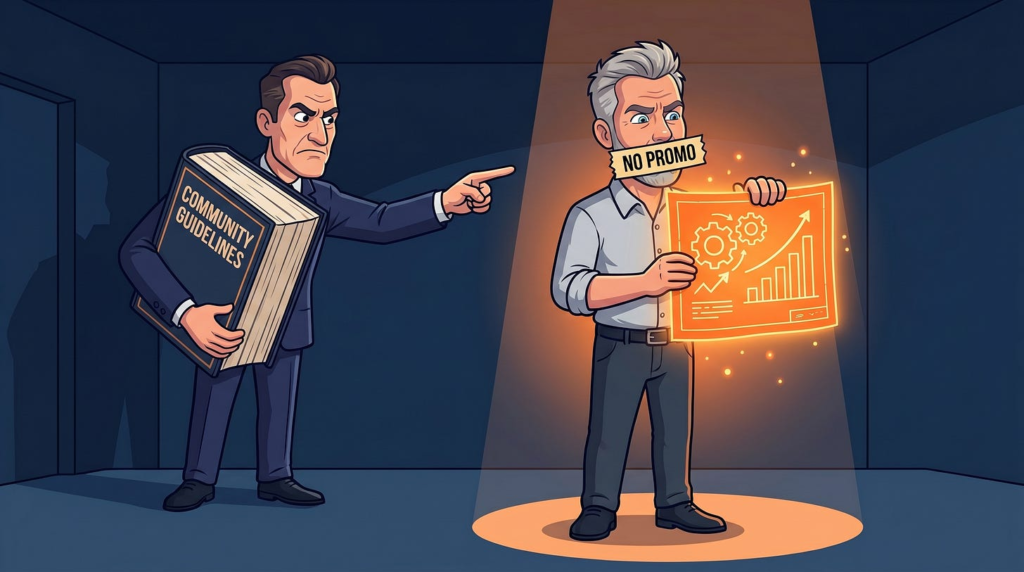
There is something that really bugs me when I join a new Skool community. After being in there for a few days, the owner will usually reach out and ask me to come and formally introduce myself… so I do, and then I get asked to delete half my post because I am talking about myself! 😂 Recently, I spent a good amount of time crafting a post for another Skool community. I put a lot of effort, wisdom, and thought into it. I never “farm” groups for members, I never use low-effort AI copy-paste crap, and I always ensure my posts are fun, engaging, and genuinely helpful. At the end, I included a polite, highly contextual link about what I was doing. Within minutes, I got a message from the admin: “𝗛𝗶 𝗔𝗱𝗮𝗺! 𝗦𝗲𝗹𝗳 𝗽𝗿𝗼𝗺𝗼 𝗶𝘀 𝗮𝗴𝗮𝗶𝗻𝘀𝘁 𝗼𝘂𝗿 𝗿𝘂𝗹𝗲𝘀. 𝗣𝗹𝗲𝗮𝘀𝗲 𝗿𝗲𝗺𝗼𝘃𝗲 𝗶𝘁 𝘀𝗼 𝘄𝗲 𝗰𝗮𝗻 𝗸𝗲𝗲𝗽 𝘁𝗵𝗲 𝗽𝗼𝘀𝘁 𝘂𝗽.” Of course, I politely removed it, but it sparked a serious question: 𝗛𝗼𝘄 𝗰𝗮𝗻 𝘄𝗲 𝗯𝗲 𝗼𝘂𝗿 𝘁𝗿𝘂𝗲 𝘀𝗲𝗹𝘃𝗲𝘀 𝘄𝗵𝗲𝗻 𝘄𝗲 𝗮𝗿𝗲 𝗻𝗼𝘁 𝗮𝗹𝗹𝗼𝘄𝗲𝗱 𝘁𝗼 𝘁𝗮𝗹𝗸 𝗮𝗯𝗼𝘂𝘁 𝗼𝘂𝗿 𝘁𝗿𝘂𝗲 𝗽𝗮𝘀𝘀𝗶𝗼𝗻𝘀 𝗮𝗻𝗱 𝘄𝗵𝗮𝘁 𝗿𝗲𝗮𝗹𝗹𝘆 𝗹𝗶𝗴𝗵𝘁𝘀 𝘂𝘀 𝘂𝗽? I understand why community owners create these rules. If you let one person slip a link in, there is a fear that everyone will do it, turning the community into a giant, spammy billboard. Nobody wants to join a group just to be siphoned off or sold to. Someone recently compared self-promotion to walking into another owner’s cafe and loudly handing out flyers for your own cafe. And I agree – that is shitty behavior. But what I am talking about isn’t handing out flyers. It’s more like being a regular customer in that cafe, chatting with the locals. The conversation steers towards cars, and somebody says, “My car is making a bit of a knocking noise.” If I say, “Well, I’ve got a garage across the road, I can take a look at that for you,” it makes zero sense for the cafe owner to kick me out for mentioning it. Relevancy and context are everything. At the end of the day, we are all here to 𝗲𝘅𝗰𝗵𝗮𝗻𝗴𝗲 𝘃𝗮𝗹𝘂𝗲 and make some cash. But the relationship in so many of these spaces has become entirely one-sided. The unspoken rule is: “Come and give my community all of your high-level value for free, but don’t you dare talk about yourself!” Success isn’t a pie that we can only take a single slice from. There is plenty for everyone, and success breeds success. In our community, Start a Business with No Money, we have the exact opposite problem. New members arrive so battered and conditioned by these restrictive “no promo” rules that they are terrified to talk about themselves! We constantly have to ask them: “What’s your community link? Please share it! What’s your website?” We want our Builders to share what they are working on, because they are the heartbeat of our clubhouse… When @Clare Goodall finally got her digital products website live after sitting on it waiting for it to be perfect, we wanted to see the link and celebrate it! When @Miri Campell launched her free 5-day challenge to help coaches get clients, she dropped her link and we rallied behind the massive value she was offering. When our Community Collaborator @Heather Boers hosted her “Crush On Biz Income” event, she shared the registration link freely so everyone could benefit. In my opinion, that is what a real exchange of value looks like. If you are a community owner, take a hard look at your rules. Are you protecting your members from spam, or are you just suffocating the genuine collaboration and passion that makes a community worth participating in? Set boundaries. Demand context. But stop gagging the people who are actually bringing value to your table. Let people share what lights them up. 𝗜’𝗱 𝗹𝗼𝘃𝗲 𝘁𝗼 𝗸𝗻𝗼𝘄 𝘆𝗼𝘂𝗿 𝘁𝗵𝗼𝘂𝗴𝗵𝘁𝘀…

How to Start a Business with No Money, Startup with Adam

How to start a business with no money

I do not believe in blueprints. They do not work. Building a business relies on YOUR passion, YOUR skills and YOUR unique values, skills and resources, not somebody else’s at a different time. Luckily, the core principle of business is just about exchanging value. Whilst we might not all have a ton of cash sat around to buy this value, we can trade with our lifetime of skills and knowledge. There are also a few little hacks that I have used to help people start businesses with no money, so I would like to share them with you now. Module 1 The “Reverse Engineer” Goal Strategy When you start a business, it is incredibly easy to get overwhelmed by the big picture. If your goal is to hit £X per month in 5 years, looking at that massive mountain will just paralyze you. Instead, we use the reverse-engineer method. Read more